For many DIY homeowners, mowing is easy only on the flattest parts of the lawn. The difficult work usually sits on slopes, ditch edges, narrow side yards, soft ground, tree roots, and tall grass that gets skipped after rain or a busy week. A remote control grass cutter appeals because it helps homeowners stay involved in the job while reducing the pushing, climbing, turning, and physical strain that make yard care frustrating.

Why DIY Homeowners Look Beyond Push and Riding Mowers
Most homeowners consider new mowing equipment when the current mower no longer matches the property. A push mower works well on small, even lawns, yet it can become tiring on hills, rough soil, and thick seasonal growth. A riding mower covers open areas quickly, yet it may feel too large or unstable near slopes, fences, drainage areas, pond edges, and narrow strips.
A remote control grass cutter fits the gap between manual mowing and large riding equipment. The user can stand on firmer ground, keep the machine in sight, and guide it through areas that would be hard to walk or drive across.
Common reasons DIY homeowners look for another option include:
- Pushing uphill causes back, shoulder, or knee strain.
- Riding mowers feel risky on inclines or soft ground.
- Narrow side yards leave little turning room.
- Grass near ponds, ditches, or roadside strips feels unsafe to mow by hand.
- Tall grass becomes harder to reclaim after weather delays.
- Seasonal leaf cleanup adds extra work beyond regular mowing.
The core issue is control. Many homeowners still want to handle their own yard care. They simply want a tool that makes the hardest zones easier to manage.
How Remote Control Grass Cutters Reduce Labor Without Removing Control
Remote operation helps because the user no longer has to walk directly behind the mower. With a remote control grass cutter, the operator still decides the path, speed, turning pattern, and cutting approach. This matters in real yards, where grass height, slope, soil firmness, and obstacles can change within the same property.
A remote grass cutter can reduce labor in several practical ways.
Less Physical Strain
The user does not have to push the mower’s weight uphill, pull it away from rough ground, or hold it steady across uneven sections. This can help older homeowners, people with limited stamina, and anyone who wants to reduce heavy yard work during hot weather.
Better Standing Position
The operator can stand where the footing is safer, and visibility is better. This is useful when mowing near banks, drainage channels, wet patches, roadside grass, or waterfront edges.
Real-Time Cut Decisions
An RC grass cutter gives the homeowner direct control over each pass. The user can slow down in dense grass, pause near debris, make another pass across rough growth, and avoid sensitive areas such as garden beds or exposed roots.
Easier Access to Skipped Areas
Hard-to-mow areas often get delayed until the grass becomes taller and tougher. Remote mowing can make those sections part of a normal weekend routine, which helps prevent small maintenance issues from becoming major cleanup jobs.
Yard Projects Where an RC Grass Cutter Makes Sense
A remote control grass cutter is most useful when the property has areas that create extra effort or safety concerns. It is less about owning advanced equipment and more about solving repeated yard problems.
A DIY RC lawn mower setup makes sense for homeowners who like hands-on property care but want fewer physically demanding steps. It can also help people manage yards with mixed terrain. One part of the lawn may need regular mowing. Another may need slower passes through thick grass. A third may need leaf cleanup in the fall.
A remote control grass cutter also helps homeowners think in zones. The goal is not to treat the whole property the same way. The goal is to use the right mowing approach for each part of the yard.
What DIY Buyers Should Check Before Choosing a Remote Grass Cutter
Before choosing a remote control grass cutter, buyers should look at the hardest part of their property first. The flat front lawn may not reveal the real challenge. The better test is the steepest bank, the wettest corner, the narrowest access point, or the area that grows fastest after rain.
Slope Rating
Check the exact slope rating for the model. A 2WD machine and a 4WD machine may have different limits. Buyers should compare the machine’s rating with the steepest part of their yard and leave room for real-world conditions such as damp grass, uneven soil, or loose debris.
Drive System and Tire Grip
Traction matters on slopes, rough patches, and soft ground. 4WD, tread design, tire grip, and machine weight all affect how confidently the mower moves across difficult terrain.
Cutting Performance
Look at deck width, blade power, blade tip speed, cutting height range, and tall grass capability. Homeowners who mow weekly may not need the same cutting capacity as someone clearing dense growth after several weeks of rain.
Battery Runtime and Coverage
A larger property needs enough runtime to complete the hardest zones without constant recharging. Buyers should check battery capacity, expected coverage, charging needs, and replacement options.
Safety Features
Important safety features include emergency stop controls, obstacle detection, tilt response, bumpers, and clear operating instructions. Remote operation creates distance, but the machine still uses fast-moving blades.
Year-Round Use
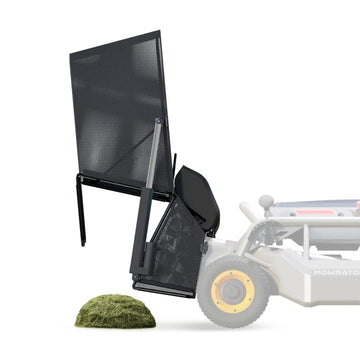
Some homeowners only need mowing. Others may benefit from mulching, bagging, side discharge, or leaf suction. For difficult properties, a model such as the Mowrator S1 Leaf & Lawn 4WD gives buyers a useful comparison point because it is built around steep slopes, Grip Tread Tire traction, tall grass cutting, obstacle clearance, and leaf cleanup capability.
Common Mistakes to Avoid with Remote Grass Cutting Machines
A remote control grass cutter can make mowing easier, yet it still requires planning and safe operation. Most problems come from buying the wrong model, using it in poor conditions, or expecting remote operation to remove all judgment from the job.
Avoid these common mistakes:
- Choosing by slope rating alone while ignoring grass height and ground conditions
- Assuming an RC grass cutter works like a fully autonomous robot mower
- Mowing near children, pets, vehicles, or loose objects
- Cutting wet or slippery areas without checking the manual
- Letting tall grass grow too long before the first seasonal cut
- Ignoring blade sharpness, tire wear, battery care, and cleaning
- Buying the lowest-priced model without checking support and parts access
- Forgetting storage space, machine weight, and transport needs
Preparation matters. Walk the area before mowing. Remove rocks, sticks, toys, hoses, and hidden debris. Check for soft spots and sudden drop-offs. Make the first pass slowly in areas with tall grass or uneven ground.
A remote control gives the operator distance from the machine, but it does not remove responsibility. Keep the mower in sight, stay aware of the surroundings, and stop immediately if people or animals enter the mowing area.
Build a More Capable DIY Yard Care Setup Around Real Property Needs
The best yard care setup is based on the parts of the property that create the most trouble. Match the machine to those conditions before thinking about convenience features. For one homeowner, the main issue may be a steep rear slope. For another, it may be a wooded edge with tall grass. Another property may need help with fall leaves, drainage areas, or narrow strips along a fence.
A practical plan divides the yard into clear work zones:
- Open lawn for regular mowing
- Sloped areas that need stable remote control
- Narrow access points that limit large equipment
- Wet or soft ground that needs extra caution
- Tall grass zones that need stronger cutting ability
- Leaf-heavy areas that benefit from collection or shredding
- Rough patches with roots, rocks, or uneven soil
A remote control grass cutter works best as part of a complete DIY routine. Some edges may still need a string trimmer. Some corners may need hand cleanup. Some zones may need slower mowing after rain or faster passes during routine maintenance.
For DIY homeowners, the value is simple: less strain, better access, and direct control. A remote grass cutter can make difficult sections easier to include in regular lawn care, helping the property stay cleaner and more manageable across the season.
FAQs about Remote Grass Cutters
Q1. Is an RC Grass Cutter Good for Small Yards?
Yes, it can be useful for small yards with slopes, rough ground, or hard access. For a simple flat lawn, it may be unnecessary. The value depends on terrain difficulty, not only lawn size.
Q2. How Long Does It Take to Get Comfortable with a Remote Grass Cutter?
Most users need a few practice sessions. Learn the controls on flat, open ground first. After that, move to gentle turns, light slopes, and slower passes near obstacles before using the machine in harder areas.
Q3. Can a Remote Grass Cutter Handle Thick Weeds?
Yes, some models can handle thick weeds or tall grass, but capacity varies by machine. Check cutting height, blade power, and tall grass limits. Very woody stems, hidden rocks, and tangled debris should be cleared first.
Q4. Do I Still Need Lawn Edging Tools?
Yes, most homeowners still need edging or trimming tools. A remote grass cutter handles larger mowing zones well, but borders around walls, posts, flower beds, and tight corners usually need separate detail work.
Q5. Should I Buy a 2WD or 4WD Remote Grass Cutter?
Choose 2WD for flatter lawns and lighter mowing needs. Choose 4WD for steeper slopes, rough terrain, taller grass, and areas where traction matters. Match the drive system to your hardest mowing zone, not your easiest one.