Walking across your lawn should be a pleasure, not a chore. When autumn arrives, that beautiful green space quickly becomes a sea of brown and yellow. If you manage more than half an acre, relying solely on a traditional rake becomes increasingly impractical. You are likely staring at your garage, wondering if a leaf vacuum or leaf blower is the right investment to keep your weekends free and your grass healthy.
Managing Leaf Debris in Large Yards: Speed and Removal Challenges
Managing large properties requires a shift in mindset. What works for a small patch of grass fails when you are dealing with acres of heavy, wet debris and endless piles.
Why High-CFM Blowers Dominate Large Properties
The primary goal of any leaf blower is displacement. It uses high-velocity air to move debris into a specific location. For owners of expansive properties, the most important metric is Cubic Feet per Minute (CFM). This number represents the total volume of air pushed out of the nozzle. While speed is helpful, volume is what allows you to move a wide wall of leaves at once.
In 2026, many property owners have shifted away from noisy gas engines. High-voltage battery systems now provide the power needed to clear long driveways and open fields without the vibration and fumes of older models. However, the biggest hurdle remains the second step. A blower moves leaves to a pile, but it does not remove them. Once that pile is created, you still face the manual labor of bagging or burning. If your property is bordered by a treeline, you can blow the debris into the wooded area, but on a manicured lawn, the work is only half finished.
Evaluating the Collection Power of a Leaf Vacuum for Leaf Removal
A leaf vacuum solves the disposal problem by pulling debris into a bag. Most modern units are actually mulchers that use an internal blade to grind the leaves into tiny pieces. This is often referred to as the mulching ratio. A common ratio is 15:1, which means fifteen bags of loose leaves are condensed into a single bag of fine mulch. This material is excellent for garden beds because it returns nutrients to the soil.
Despite the benefit of removal, traditional handheld vacuums have significant ergonomic flaws that become obvious on large lots. Consider these common limitations:
- Weight Accumulation: As the bag fills with mulched leaves, it becomes incredibly heavy. On a large lot, this weight leads to shoulder and back strain.
- Moisture Sensitivity: Moisture is the enemy of suction. If the leaves are even slightly damp, they tend to clump and clog the intake tube.
- Frequent Downtime: Handheld bags have limited capacity. For an acre of land, you might have to stop and empty the bag dozens of times.
- Manual Handling: Emptying the bag usually requires unzipping and shaking out the debris, which exposes the user to dust and allergens.
Property owners often find that while a leaf vacuum is thorough, the physical toll is much higher than using a blower. This leads many to look for a solution that combines suction power with a more comfortable operation style.

Why a Third Option Is Better for Efficient Yard Cleanup
Finding a balance between moving leaves and actually removing them is the key to a clean lawn. Modern advancements now offer a way to free the operator from physical labor entirely.
Remote-Controlled Collection and the End of Physical Yard Work
The newest category of yard care equipment removes the heavy lifting from autumn maintenance. Automated and remotely controlled units combine the high-capacity suction of a professional vacuum with the ease of a remote. Instead of carrying a heavy engine on your back or pulling a bag across your lawn, you manage the machine from a safe distance.
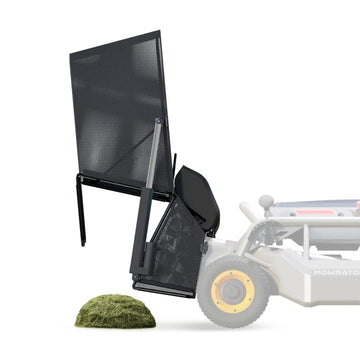
One of the most helpful features in this category is the ability to empty the collected debris without touching the bag. Technology like this auto-dumping collection kit allows you to drive the unit to a compost pile and release the leaves with a single button. This eliminates the bending and lifting that usually causes injuries. Because these units are built on a sturdier chassis than handheld tools, they can use more powerful blades to shred even damp debris that would clog a standard handheld vacuum.
Handling Steep Slopes and Complex Terrain with Automated Tools
Large properties are rarely perfectly flat. Traditional walk-behind vacuums can be dangerous on hills, especially when the bag is full and the center of gravity shifts. Handheld blowers are also difficult to use while maintaining your balance on a slippery, leaf-covered incline. This is where smart mowing and collection technology proves its value.
- Low Center of Gravity: Remote-controlled units are designed with wider tracks or tires to prevent tipping on hills.
- Superior Traction: These machines can safely handle extreme slopes up to a 100% grade, which are physically impossible (and dangerous) for a person to traverse with manual tools.
- Distance Safety: The operator can stand on level ground while the machine safely clears steep embankments.
- Precise Control: Using a remote allows for tight turns around trees and garden beds without the physical wrestling required by push vacuums.
The Costs and Requirements of High-End Equipment
Choosing an automated system is a commitment to long-term efficiency and physical health. While a backpack leaf blower might cost a few hundred dollars, a remote-controlled collector is a more substantial investment. However, the return on investment comes in the form of saved time and preserved health. For many, the cost of the machine is lower than the recurring cost of hiring a professional landscaping crew. It also prevents the long-term physical wear and tear associated with manual labor.
When evaluating these options, it is helpful to look at whether your current mower can be adapted for the task. Some owners find that using a mower to pick up leaves is an efficient way to handle the bulk of the work if the right accessories are installed. You must also consider the infrastructure required for this technology. These units need a dedicated space for storage and a safe area to charge high-capacity batteries.

Advanced Strategies for Clearing Massive Amounts of Leaves
The difference between a weekend spent working and a weekend spent relaxing often comes down to your strategy. Combining professional methods with high-tech tools creates the most efficient results.
Using the Hybrid Method to Finish Yard Work Faster
Landscaping professionals rarely rely on just one tool. The most efficient way to clear a large yard is called the hybrid method. This strategy uses the strengths of each tool to minimize time.
- The Perimeter Clear: Use a high-CFM leaf blower to clear the edges of your property. Blow leaves away from fences, flower beds, and foundations toward the center of the lawn.
- Creating Windrows: Blow the leaves into long, manageable rows. Instead of trying to blow these rows into one giant pile, keep them in straight lines across the lawn.
- The Collection Pass: Bring in your remote-controlled collection unit. Drive along these rows to shred and bag the debris automatically.
- The Final Dump: Drive to your designated compost area. Use the auto-dump feature to clear the bag and return to the next row without leaving your standing position.
This combined approach leverages the blower's speed and the vacuum's removal power. It prevents the exhaustion of carrying a blower for hours and the frustration of manually emptying a small vacuum bag every few minutes.
Comparing Tool Types with a Simple Decision Matrix
To make the best choice, you need to look at your specific landscape and physical needs. The following table compares the most common options for large properties:
| Feature | Leaf Blower | Leaf Vacuum | Remote-Controlled (RC) Leaf Collector |
|---|---|---|---|
| Primary Function | Moves leaves | Collects and mulches | Collects, mulches, and dumps |
| Physical Effort | Moderate (Backpack) | High (Manual Bag) | Low (Remote Operated) |
| Speed on Open Flat | Very Fast | Slow | Fast |
| Safety on Slopes | Low | Low | Very High |
| Finality | Leaves a pile | Removes debris | Removes debris |
Select the Technology That Saves Your Time and Health
Managing a large property does not have to be a source of seasonal dread. Modern yard care is moving toward systems that protect your body while delivering professional results. By choosing the right combination of high-CFM blowers and automated collection technology, you can maintain a pristine lawn while protecting your back and joints from unnecessary strain. Evaluate your acreage and your health needs today to ensure your property stays clear and healthy all through the coming months.
Frequently Asked Questions about Leaf Vacuums and Blowers
Q1: Is a Leaf Vacuum or Blower Better for Large Yards?
A leaf blower is usually faster for moving leaves, but a leaf vacuum is better for total removal. For large yards, a blower is best for the edges, while a vacuum or automated collector is better for finishing the job and getting the leaves off the grass.
Q2: Do Leaf Vacuums Actually Work on Wet Leaves?
Standard consumer vacuums often struggle and clog when leaves are wet. However, professional units with high-strength steel blades can handle damp debris. If you live in a rainy climate, look for a machine with a heavy-duty shredding impeller made from 40MnB steel.
Q3: Is It Worth Getting a Leaf Vacuum?
It is worth the investment if you cannot burn leaves or if your local trash service does not pick up loose piles. Vacuuming also helps your lawn's health by preventing thick layers of leaves from suffocating the grass over the winter.
Q4: What Is the Fastest Way to Clean Up Leaves in a Large Yard?
The fastest way is the hybrid method. Use a blower to move leaves into easy-to-reach rows, then use a high-capacity collector or a smart mower to shred and dump the debris. This reduces the time spent manually operating tools.
Q5: Is It Better to Blow or Vacuum Leaves?
It depends on where the leaves are going. If you have a woods line where leaves can rot naturally, blowing is easier. If you need to bag them or want to use them as garden mulch, vacuuming is the better option.