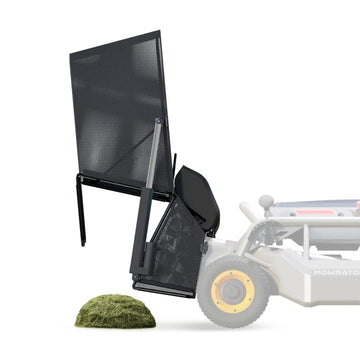
Sloped lawns, thick grass, wet leaves, and winter snow can make property care harder than it looks. A push mower may be tiring or unsafe on hills. A riding mower is fast on open turf, but it can feel unstable near ditches, pond edges, or icy pavement. A remote control lawn mower gives property owners a safer way to handle difficult areas from a distance while keeping direct control of the work.
For year-round maintenance, the right machine should cut tough grass during the growing season, help manage leaves in the fall, and support light snow clearing with the correct plow attachment in winter.

What Makes a Remote Control Lawn Mower Truly “All-Terrain”?
An all-terrain mower should be judged by its performance on the hardest parts of a property. A capable remote control lawn mower needs traction, stability, cutting strength, predictable steering, and enough clearance to move across rough areas without getting stuck.
| Feature | What to Check | Why It Matters |
| Drive System | 4WD, rear-wheel drive, or track drive | Better control reduces slipping on slopes. |
| Slope Rating | Maximum safe operating grade | Hill work depends on traction, braking, and balance. |
| Wheels or Tracks | Tread depth, width, or track surface | Grip affects safety and turf protection. |
| Cutting Deck | Width, height range, and blade strength | Thick grass needs torque and clearance. |
| Controls | Range, response, and emergency stop | Smooth control matters near trees, fences, and water. |
| Attachments | Bagging, mulching, towing, and plowing | Seasonal tools extend the machine’s usefulness. |
A strong frame and low center of gravity help on uneven ground. Too much weight can mark soft lawns, but too little weight can reduce traction. The best fit depends on soil type, slope, and how often the property gets wet.
Spring and Summer: Conquering Steep Hills and Overgrown Brush
Spring and summer expose lawn equipment problems quickly. Grass grows fast, weeds thicken around fence lines, and rain can make slopes slick. A remote control lawn mower can help users stay on level ground while controlling the cut across banks, rough patches, and areas that are hard to reach with a riding mower.
Why Slope Rating Matters
For people searching for the best mower for hills, slope rating should be one of the first details to check. A powerful blade still needs secure traction and braking on a grade. Wide tires, aggressive tread, 4WD, or track drive can help the machine stay planted during slow passes.
A higher slope rating is especially useful for:
- Roadside banks
- Drainage ditches
- Pond edges
- Sloped backyards
- Narrow fence strips
- Uneven areas around tree roots
How to Handle Tall Grass and Light Brush
Overgrown areas often need a slower approach than regular weekly mowing. Tall grass, weeds, and light overgrowth are common targets for heavy-duty all-terrain mowers, but dense brush should be handled carefully.
Before mowing, clear rocks, wire, toys, fallen branches, and hidden debris. Dense grass may require a higher first pass, followed by a lower finish cut after the clippings dry. Woody stems, hidden stumps, heavy vines, and construction debris should be removed before mowing.
Safer Mowing for Difficult Areas
The safest mowing plan is slow and controlled. Avoid sharp turns on hills, keep the mower within its rated slope limit, and watch how the machine reacts on wet or loose ground.
A remote control lawn mower can reduce physical strain for older users, people with knee or back pain, and property owners who dislike walking behind a heavy mower on steep ground. The operator still needs to watch the machine closely. Remote operation lowers direct physical effort, but it does not remove the need for sound judgment.

Autumn Cleanup: Using a Leaf Vacuum Mulcher for Shredding and Collection
Fall maintenance shifts the work from growth control to debris control. Leaves collect in low spots, along fences, under shrubs, and across driveways. Left too long, they can trap moisture, block sunlight, clog drains, and make walkways slippery.
A remote control lawn mower with leaf shredding, vacuuming, or collection support can reduce the need for separate cleanup tools. The biggest benefit is volume reduction. Whole leaves fill bags quickly. Shredded leaves take up less space, break down faster, and may be easier to compost or use as light mulch when they are clean.
Good leaf cleanup depends on timing and conditions:
- Dry leaves shred and collect more easily.
- Wet leaves require slower passes and more frequent checks.
- Deep piles should be handled in layers.
- Sticks, stones, and trash should be removed first.
- Collection bags or bins need emptying before airflow drops.
Leaf systems are useful for properties with mature trees, long driveways, and large lawn areas where raking takes too much time. They can also help users who want to avoid bending, lifting, and dragging tarps across wet grass.
A leaf vacuum mulcher is still a yard-care attachment, so it has limits. It should not be used to pick up gravel, metal, large branches, or heavy piles of acorns. Those materials can damage blades, reduce suction, or create a safety issue.
Fall is also a good time to prepare the machine for winter. Clean the deck, inspect blades, check tires or tracks, and confirm that any plow or tow attachment fits before the first snowstorm.
Winter Plowing: Turning an RC Mower Into a Remote Control Snowplow
Winter use requires clear expectations. An RC snowplow pushes snow with a blade. A remote control snow blower pulls snow into an auger and throws it through a chute. These tools solve different problems, so the right choice depends on snow depth, surface type, and where the snow can be placed.
RC Snowplow vs. Remote Control Snow Blower
A remote control snowplow is designed to push snow to the side. It can work well for light to moderate residential snow clearing on driveways, sidewalks, private paths, and paved areas.
A remote control snow blower is different. It collects snow and throws it away from the clearing path. That makes it more useful for deep snow, repeated heavy storms, or driveways with little room for snowbanks.
The choice depends on the job:
- Choose a plow for frequent light clearing and open edges.
- Choose a blower for deeper snow and limited pile space.
- Avoid treating a plow blade like an ice scraper.
When a Lawn Mower Plow Makes Sense
A lawn mower plow setup works best when snow is cleared early. Fresh powder is easier to push than heavy, wet snow. Repeated short passes are usually better than waiting until the end of a storm and trying to move one deep layer.
A remote control snowplow is practical for:
- Light snowfalls
- Short to medium driveways
- Walkways and private lanes
- Paved surfaces with room along the edges
- Users who want to reduce manual shoveling
Packed snow and ice can overload the blade and reduce traction, so they should be handled with proper snow-removal equipment.
RC Plow vs. Riding Lawn Mower Snowplow
A riding lawn mower snowplow may still be useful on larger flat areas, especially with chains, wheel weights, and a suitable blade. The main trade-off is operator exposure. The user sits on the machine in cold, wet, and potentially slippery conditions.
An RC mower keeps the operator off the seat, which can feel safer and more comfortable for some users. The machine still needs traction, a compatible plow attachment, and a suitable surface. Use controlled speed, avoid icy buildup, and do not force the blade into frozen piles.
How to Choose the Best All-Terrain Remote Control Lawn Mower for Your Property
Flat mowing, hill mowing, leaf cleanup, and snow plowing each place different demands on the machine. The right remote control lawn mower should solve the problems you face every season, along with the easiest weekly cut.
Match the Machine to the Terrain
Walk the property and identify the worst areas: steep banks, drainage cuts, soft soil, exposed roots, narrow gates, and rough ground. Compare the slope rating to the steepest section you expect to mow. If traction is the biggest concern, compare wheel-based RC mowers with the remote control track mower category. Tracks may help on loose or muddy ground, while wheels may be easier to maintain and store.
Check Cutting Needs Before Attachments
A mower should first be good at mowing. Look at deck width, cutting height range, blade access, discharge options, and the type of grass on the property. Thick grass, weeds, and uneven soil require different performance than a small, flat lawn.
Plan for Seasonal Tasks
If fall and winter maintenance matter, check attachment support before buying. A tow hitch, collection bag, leaf shredding system, and plow blade can extend the machine’s use. For homeowners who want a remote control lawn mower that can handle more than grass, the Mowrator S1 4WD is worth considering because compatible attachments can help with leaf cleanup, light towing, and snow plowing.
Think About Storage and Handling
A remote control lawn mower can be heavier than a standard walk-behind mower. Check garage space, ramp access, charging location, and storage height. If the machine is hard to move or clean, it may become frustrating even if it performs well outdoors.
Prioritize Safety Features
Look for an emergency stop, reliable braking, blade shutoff behavior, stable steering, and clear instructions. Keep children, pets, and bystanders away from the work zone. Remote control improves distance from the hazard, but safe operation still depends on the person holding the controller.
FAQs about RC Mowers and Snow
Q1. Are RC Mowers Worth It for Small Yards?
Yes, if the yard has slopes, mobility concerns, or hard-to-reach areas. For a small flat lawn, a standard mower may be more cost-effective. The value comes from safety, access, and reduced physical strain.
Q2. How Steep a Hill Can an RC Mower Handle?
It depends on the model’s rated slope limit, drive system, traction, and ground conditions. Wet grass, loose soil, and uneven surfaces reduce safe performance. Choose a mower rated above your steepest regular mowing area.
Q3. Can You Plow Snow With a Lawn Mower?
Yes, some mowers can plow snow when fitted with a compatible blade. This works best for light to moderate snow on paved surfaces. Deep, wet, icy, or packed snow usually needs stronger equipment.
Q4. What Is the Difference Between a Snowplow and a Snow Blower?
A snowplow pushes snow to the side. A snow blower collects snow and throws it through a chute. Plows suit frequent light clearing. Blowers are better for deep snow or limited pile space.
Q5. Do RC Mowers Damage Grass?
They can if the ground is soft, turns are too sharp, or the mower is too heavy for the turf. Use slower turns, avoid soaked lawns, keep blades sharp, and choose tires or tracks that match your soil.