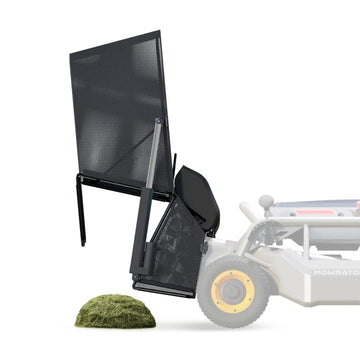
A lawn mower blade affects cut quality, airflow, clipping movement, and cleanup time. If your mower leaves wet clippings under the deck or struggles with seasonal leaves, blade choice may be part of the problem.
For the Mowrator S1, High Lift Mower Blades are designed to lift wet or flattened grass before cutting and move the clippings toward the collection bag. Mulching Blades use a dual-stage design to shred and vacuum fallen leaves while using less power. Both blade types can work with the collection bag, so the main choice depends on the material you need to handle.

What Do Different Mower Blades Actually Do?
A lawn mower blade does two jobs at the same time: it cuts grass and controls airflow under the deck. That airflow affects how grass stands before cutting, how clippings move afterward, and how clean the lawn looks after each pass. Different blade designs control this airflow in distinct ways, which is why choosing the right type matters for cut quality and clipping management.
| Blade Type | Main Job | Best Fit |
|---|---|---|
| High Lift Mower Blades | Lift wet or flattened grass before cutting and move clippings through the deck | Wet grass, heavy grass clippings, and grass collection |
| Mulching Blades | Vacuum and shred leaves through a dual-stage cutting action | Fallen leaves, seasonal leaf cleanup, and shredded-leaf collection |
Both options can be paired with the collection bag. High Lift Blades mainly help collect grass clippings, while Mulching Blades prepare shredded leaves for collection.
High Lift Blades
High Lift Mower Blades create strong upward airflow under the deck. This airflow helps lift wet, leaning, or flattened grass into a more upright position before cutting. It then moves the heavier grass clippings toward the chute or collection bag.
They are most useful for:
- Wet or damp grass
- Flattened or leaning grass
- Heavy grass clipping pickup
- Bagging after delayed mowing
- Reducing wet grass buildup under the deck
Mulching Blades
Mulching blades are often associated with recutting grass clippings, but the Mowrator Mulching Blade is specifically designed for leaf shredding and vacuum collection.
Its high-low blade structure creates a dual-stage cutting action that breaks fallen leaves into finer pieces and draws them toward the collection bag. The lower-power design can also support longer battery runtime during leaf cleanup.
It is a good fit for:
- Fallen leaves across the lawn
- Seasonal leaf cleanup
- Leaf shredding and vacuuming
- Collecting finer leaf pieces
- Longer cleanup sessions
Blade condition still matters. A dull or damaged blade reduces cutting and suction performance, regardless of the blade type.
When High Lift Blades Work Better
High Lift Mower Blades work best when wet or flattened grass needs stronger upward movement before it can be cut cleanly. The added airflow also helps carry heavy grass clippings through the deck and into the collection bag.
Choose them when:
- Wet grass lies flat before cutting
- Damp clippings stick under the deck
- Grass clippings do not reach the bag efficiently
- Dense or delayed growth produces heavier clippings
- You need cleaner grass collection after mowing
Their main advantage in the Mowrator system is lifting and collecting wet grass.
Practical Limits
Stronger airflow requires additional power and may reduce runtime compared with the lower-power Mulching Blade. High lift can also pull more grit into the deck in sandy or dusty areas.
Use High Lift Blades when the main problem is wet grass, flattened growth, deck buildup, or poor grass clipping collection. They are not the primary choice for shredding fallen leaves.
When Mulching Blades Make More Sense
The Mowrator Mulching Blade makes the most sense when fallen leaves are the main cleanup problem. Its high-low blade design shreds leaves in two stages while the airflow draws the smaller pieces toward the collection bag.
Choose it when:
- Leaves cover part or all of the lawn
- Whole leaves are difficult to collect efficiently
- You want to shred and bag leaves in one process
- Seasonal leaf cleanup requires longer operating time
- Grass conditions are relatively manageable
The lower-power blade design can support longer battery runtime. Actual runtime still depends on leaf depth, terrain, travel speed, and battery capacity.
For heavy leaf cover, reduce mowing speed and process smaller areas at a time. When wet or flattened grass becomes the main problem, switch to High Lift Blades.
Grass Clippings, Leaves, and Bagging Performance
Both Mowrator blade types can work with the collection bag. Bagging alone does not determine which blade to install. The material entering the deck is the more useful deciding factor.
Bagging Grass With High Lift Blades
High Lift Blades are designed to lift wet or flattened grass before cutting and move the heavier clippings toward the bag. Use them when damp grass sticks under the deck, grass clippings move poorly, or the bag fills unevenly.
Bagging Leaves With Mulching Blades
Mulching Blades are designed to vacuum and shred fallen leaves before collection. Their dual-stage cutting action reduces leaf size and sends the finer material toward the bag.
| Yard Material | Better Blade Choice | Reason |
|---|---|---|
| Wet or flattened grass | High Lift Blades | Stronger airflow lifts grass before cutting |
| Heavy grass clippings | High Lift Blades | Added airflow moves clippings toward the bag |
| Light or moderate leaf cover | Mulching Blades | Dual-stage cutting shreds and vacuums leaves |
| Heavy leaf cover | Mulching Blades | Leaf shredding reduces the size of collected material |
| Wet grass mixed with leaves | Choose by the main problem | Use High Lift for wet grass buildup or Mulching for leaf-focused cleanup |
When grass and leaves are both heavy, separate passes may produce a cleaner result. Process the wet grass first, then install the Mulching Blade for the remaining leaves.
Blade Choice for Thick Grass, Wet Grass, and Uneven Ground
Thick grass, wet grass, slopes, roots, dips, and rough patches create different cutting problems. A lawn mower blade can help, but the final result also depends on mower power, deck design, tire grip, cutting height, and travel speed.
Thick Grass
High-lift blades usually work better in thick grass because they move air and push heavy clippings out of the deck with greater force.
For very tall grass:
- Raise the cutting height for the first pass.
- Move slower than usual.
- Avoid cutting down to the final height in one pass.
- Make a second pass at the normal height if needed.
This reduces clumping, protects the turf, and gives the blade extra room to move clippings.
Wet Grass
Wet grass can bend, lie flat, and stick beneath the deck. Delay mowing when conditions allow.
If the lawn must be cut, High Lift Blades create stronger upward airflow that helps pull the grass upright before cutting. The same airflow carries the heavier wet clippings toward the collection bag.
Use these steps:
- Reduce travel speed.
- Raise the cutting height slightly.
- Use the collection bag for wet clippings.
- Process heavy growth in more than one pass.
- Clean the deck after mowing.
Uneven Ground
Blade type cannot solve every uneven-ground issue. A low cutting height can scalp raised spots. Too much speed can make the deck bounce and leave uneven patches.
For rough areas:
- Use a higher deck setting.
- Reduce mowing speed.
- Avoid sharp turns on dips and slopes.
- Keep blades sharp for a cleaner cut.
- Watch for roots, rocks, and hidden debris.
Blade choice and mower capability solve different problems. Features such as 4WD, tire grip, and slope capacity help the Mowrator S1 move through difficult terrain, while the installed blade determines how grass or leaves are processed.
Match Your Mower Blade to the Way You Maintain Your Lawn
The best mower blades are the ones that match the work you do most often. A blade that handles fallen leaves efficiently may not provide the lift needed for wet, flattened grass. A stronger High Lift setup can improve wet-grass collection, while the lower-power Mulching Blade is better suited to longer leaf-cleanup sessions.
| Yard Situation | Better Blade Choice | Reason |
|---|---|---|
| Wet or flattened grass | High Lift Blades | Upward airflow lifts grass before cutting |
| Damp clippings sticking under the deck | High Lift Blades | Stronger airflow improves clipping movement |
| Tall grass after delayed mowing | High Lift Blades | Heavy grass clippings move through the deck more effectively |
| Collecting grass clippings | High Lift Blades | The blade directs cut grass toward the bag |
| Seasonal leaf cleanup | Mulching Blades | The blade shreds and vacuums fallen leaves |
| Collecting shredded leaves | Mulching Blades | Dual-stage cutting reduces leaf size before bagging |
| Longer leaf-cleanup sessions | Mulching Blades | The lower-power design can support longer battery runtime |
| Using the collection bag | Either blade | Choose High Lift for grass or Mulching for leaves |
If wet grass is the main problem, install High Lift Blades. If fallen leaves are the main cleanup load, use the Mulching Blade. The collection bag is compatible with both jobs.
Choose the Blade That Fits the Job
Choose High Lift Blades when wet or flattened grass needs to be lifted, cut, and moved into the collection bag. Choose the Mowrator Mulching Blade when fallen leaves need to be vacuumed, shredded, and collected. Its lower-power design can also support longer runtime during leaf cleanup.
Both blade types work with bagging, so decide based on the material in the yard. Keep the blades sharp, reduce speed in heavy growth, and change the setup as grass and leaf conditions change.
FAQs
Q1. Can I Mix Blade Types on the Same Mower?
No. Do not mix different blade types on the same multi-blade mower unless the mower maker lists that setup as compatible. Mixed airflow and blade weight can cause vibration, uneven cutting, poor discharge, or added stress on the spindle system.
Q2. What Blade Hole Pattern Should I Check Before Buying?
Check the center hole, outer mounting holes, blade length, width, thickness, and rotation direction. A blade can look similar and still fit incorrectly. Poor fit can cause vibration, loose mounting, uneven cutting, or unsafe operation.
Q3. Can a New Blade Cause Mower Vibration?
Yes. A new blade can cause vibration if it is unbalanced, installed upside down, mounted loosely, or incompatible with the mower deck. Stop the mower, remove the battery, and inspect the blade and mounting hardware before using it again.
Q4. Should I Buy OEM or Aftermarket Mower Blades?
OEM blades are usually the safer choice when fit, balance, and deck compatibility matter most. Aftermarket blades can work well, but they must match the mower's length, hole pattern, thickness, lift design, and rotation direction exactly.
Q5. Is It Safe to Sharpen a Bent Mower Blade?
No. A bent mower blade should be replaced, not sharpened back into use. Bending can weaken the metal and throw off balance. A damaged blade can vibrate, cut unevenly, and create a serious safety risk.