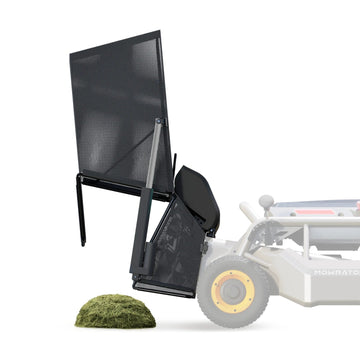
A 70 L bag holds about 2 U.S. bushels. Whether that capacity suits your yard depends on how quickly shredded leaves fill it and how often you are willing to empty it. Start with bag sizes approved for your machine. For large lawns with heavy leaf fall, compare bag capacity alongside mulching performance and unloading options. A system that shreds leaves before collection and makes emptying easier can help you manage repeated loads throughout a cleanup session.
How Can You Estimate Leaf Volume?

Test a high-leaf area for ten minutes to estimate your bag capacity needs. Vacuum a section near trees, fences, hedges, patios, or decks, then check how full the bag becomes.
Repeat the test after a windy day or during peak leaf drop. Use the heavier result as your reference. A light layer of leaves across open grass needs less capacity than dense piles gathered along a fence or under shrubs.
Leaf type also affects bag space. Large maple leaves take up room quickly before mulching. Small leaves, pine needles, and shredded material settle more tightly. Grass clippings, seed pods, and small twigs can also change how fast the bag fills.
A leaf vacuum with bag should hold enough material for one useful work zone. A short test gives you a practical number for your own yard.
How Does Yard Size Affect Bag Size?
Tree cover and cleanup frequency help determine how much collection capacity you need. On a large property, also consider how efficiently the machine shreds leaves and how you will empty each load.
| Cleanup Situation | What to Prioritize | What to Check Before Buying |
|---|---|---|
| Light leaves collected regularly | Manageable capacity and simple emptying | Whether the approved bag sizes suit your usual cleanup area |
| Dense leaf fall beneath mature trees | Mulching before collection | How the machine processes leaves before they enter the bag |
| Large lawn with repeated collection loads | Convenient unloading | Whether you must remove and lift the bag each time |
| Disposal point far from the lawn | Collection route and transport | Whether the machine can carry the load to the unloading area |
Choose from collection bags approved for the equipment. For heavy leaf fall, assess the complete collection process: how quickly the bag fills, where you empty it, and how much handling each load requires.
Can You Carry a Larger Bag?
Choose a bag you can lift and empty safely when full. Large bags reduce emptying stops, yet damp leaves, grass clippings, soil, and twigs can add weight quickly.
Check the following before choosing capacity:
- Lift height: A ground-level compost pile needs less lifting than a tall yard-waste cart.
- Travel distance: Long walks favor a smaller or medium bag.
- Ground surface: Steps, slopes, and uneven ground favor lighter loads.
- Bag handles: Wide handles and reinforced straps improve carrying control.
- Bag shape: A balanced bag feels easier to carry than a narrow bag that hangs low.
Test a full bag several times before you settle on a size. Include your normal route from the cleanup area to the disposal point. A capacity that feels fine near the garage may feel very different across a large yard.
If lifting and emptying a full bag is the main concern, our Auto-Dumping Bag uses one-button emptying and a full-bag detection system for compatible S1 models.
How Do Mulching and Moisture Affect Capacity?
Mulched dry leaves use less bag space, while wet leaves add more weight. A mulching system cuts leaves into smaller pieces, allowing more material to fit inside the collection bag.
Dry leaves stay light and often move through the vacuum easily. Wet leaves can pack together, weigh more, and reduce airflow. Dew, rain, damp grass, and soil all call for lighter loads.
Leaf shape matters as well. Broad leaves may fill a bag quickly before chopping. Fine leaves and needles may compact more tightly. Small twigs can take up room without adding much usable capacity.
Shredded leaves also work well in compost. The U.S. Environmental Protection Agency lists dry leaves as compostable yard material. Mulched material can take up less space in a compost pile or yard-waste bag.
Choose a larger capacity for dry leaves and long cleanup sessions. Use moderate loads during wet or mixed-debris conditions.
How Often Should You Empty the Bag?
Choose bag size based on how often you want to stop and empty it. The best option depends on your lifting comfort, leaf conditions, and disposal setup.
Frequent emptying suits lighter work. A smaller bag works well for damp leaves, narrow paths, flower beds, and short cleanup sessions.
Moderate emptying suits regular yard care. A medium bag fits many homes with average leaf cover and a nearby compost pile or cart.
Less Frequent Emptying Suits Larger Yards. A larger bag fits dry leaves, wide lawns, and disposal points close to the work area.
How often to empty a leaf vacuum bag can change through the season. Early fall may bring one light load. Peak leaf drop after wind can fill the same bag much faster.
Empty the bag before leaves press against the intake area or pull heavily on the bag supports. A moderate fill level helps maintain steady collection.
Pick the Right Bag for Faster Cleanup
For large lawns and repeated collection loads, compare how the equipment fills and empties its bag. Mulching reduces the space leaves occupy, while convenient unloading reduces the handling involved each time you stop.
The Mowrator S1 Leaf & Lawn uses the included mulching blade to lift, shred, and collect leaves into a 70 L bag. Choose the standard collection setup if manual emptying suits your routine, or the optional auto-dumping setup if repeated bag removal and lifting are your main concerns.
FAQs
Q1: Are Replacement Leaf Vacuum Bags Universal?
No. Replacement bags use different attachment collars, straps, zippers, frames, and discharge connections. Match the bag to your equipment model number and connector style. Check the opening diameter, mounting layout, and bag dimensions before ordering. A proper fit helps keep leaves inside the collection system during operation.
Q2: Can You Use Disposable Bags as Liners?
Only if the equipment manufacturer specifically allows liners. A liner can obstruct airflow through a collection bag, so check the manual before adding one. For disposal, empty collected leaves into an approved paper yard-waste bag if your local collection service accepts it.
Q3: Which Bag Material Controls Dust Best?
Tightly woven polyester with a fine-filter panel usually controls dust better than open mesh. Reinforced seams help the bag handle regular use, while vent panels support airflow. Choose a durable fabric if you often collect dry leaves. Clean dust from the fabric surface after heavy use to keep the bag in good condition.
Q4: Can You Wash a Leaf Vacuum Bag?
Yes, most fabric bags can be washed gently with water and mild soap. Shake out loose debris first, rinse the fabric thoroughly, and let the bag air dry fully before reinstalling it. Avoid harsh cleaners and high-pressure spray. Check the care label for coated fabrics, mesh sections, and special stitching.
Q5: When Should You Replace a Collection Bag?
Replace a collection bag when you find holes, split seams, broken zippers, loose straps, or a damaged attachment collar. Replacement may also be needed if the bag releases excess dust or slips during use. Inspect the bag before each leaf season and after long storage periods.