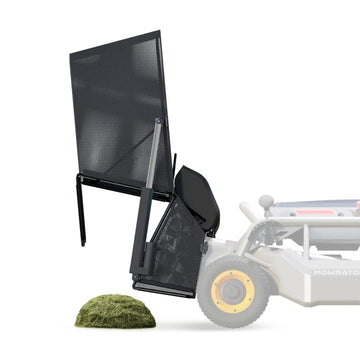
A remote control brush mower can fit tall grass, dense weeds, rough lots, and slopes that make walk-behind mowing uncomfortable. It works best on grassy growth and weeds within the mower’s stated limits, with firm ground and a clear cutting path. Heavy woody brush, saplings, hidden debris, and terrain beyond the machine’s slope rating call for different equipment or professional help.
Is a Remote Control Brush Mower the Right Fit for Your Property?
A remote control brush mower fits properties with overgrown grass and weeds where controlling the mower from a distance makes sense. Use the conditions below to decide if this equipment class matches your work.
| Property Condition | A Remote Control Brush Mower May Fit | Check Before You Buy |
|---|---|---|
| Tall grass | Yes, for grass within the mower’s published cutting limit | Cutting height range and deck power |
| Thick weeds | Yes, when growth is soft-stemmed and the area is clear | Weed density and hidden debris |
| Rough or uneven ground | Often, with enough clearance and traction | Roots, ruts, rocks, drainage dips, and soft spots |
| Sloped yard or bank | Often, with a model rated for your actual grade | Slope rating, tire traction, and dry ground conditions |
| Large lot | Possibly | Runtime, charging time, and realistic hourly coverage |
| Brush with woody stems | A different equipment class may fit better | Stem thickness, density, and cutting-tool rating |
| Young trees or saplings | Dedicated brush-clearing equipment may fit better | Plant size and local clearing rules |
The best fit is a property where grass and weeds are hard to manage with a regular mower, while the machine can still travel and cut within its intended range.
Match the Mower to the Growth You Need to Cut
Grass height alone does not tell you what machine you need. Look at the plant type, stem texture, and items that may be hidden below the growth.
Tall Grass and Soft-Stemmed Weeds
A remote control brush mower can suit thick lawn grass, field grass, and soft-stemmed weeds across a yard, roadside strip, or rough lot. Dense growth may call for a higher first pass and slower travel speed, but those are operating choices after you have selected a suitable mower.
Check the manufacturer’s stated maximum cutting height. A mower built for tall grass still has limits, and very dense growth can reduce cut quality or use more battery power.
Woody Stems, Vines, and Saplings
Woody stems change jobs. They can catch around the deck, damage blades, or stop the mower. A remote control brush cutter made for heavier vegetation may use a different cutting system, drive setup, and frame than a residential remote mower.
Walk the area before buying or mowing. Thick stems, fallen limbs, wire, old fencing, rocks, and buried material all affect the equipment you need.
Growth That Hides the Ground
Tall weeds can cover holes, roots, broken branches, and drainage edges. Ground clearance helps a mower travel over minor surface changes, but it does not make hidden hazards safe.
Clear growth limits prevent an expensive mismatch. Grass and weeds point toward a mower; heavy woody growth points toward specialized clearing equipment.
Choose for Slope, Surface, and Access
Terrain should shape your choice as much as vegetation. The same mower can behave very differently on dry grass, loose soil, wet clay, or a rutted bank.

Match the Slope Rating to Your Hardest Regular Area
Measure the steepest section you expect to mow, then compare it with the mower’s stated slope rating. Leave a practical margin for tall grass, uneven ground, and changing weather.
Remote control keeps you away from the slope while you operate the mower, but the machine still needs traction and a stable route. Steep banks above water, roads, retaining walls, or sharp drop-offs need extra caution. For slope-specific selection and use, read our remote control slope mower article.
Look at the Surface, Not Just the Grade
A moderate hill with firm turf may be easier than a shallow slope covered in wet leaves or loose soil. Check for:
- Roots, rocks, holes, and deep ruts
- Soft ground near drainage areas
- Loose gravel or mulch
- Narrow turns near fences and garden beds
- Gates, paths, and storage access
- Low branches or brush that blocks your view
A 4WD setup can add useful traction on rough or sloped ground. It still needs a clear surface and enough room to turn safely.
Check How You Will Move and Store the Mower
Measure gates, side-yard passages, shed doors, and the place where you plan to charge and store the mower. A machine can fit the yard’s terrain yet be awkward to move through the property.
Choose a model that works through the whole job, from storage to the farthest cutting area.
Compare the Features That Matter Before You Buy
The feature list should answer a property-specific question. Focus on the parts that affect the grass, ground, and workload you actually have.
| Feature | Why It Matters | A Useful Buying Question |
|---|---|---|
| Drive system | Affects traction on slopes and uneven ground | Does your property need 4WD, or is firm, flatter ground the main use case? |
| Published slope rating | Sets a terrain boundary for the mower | Is your steepest normal mowing area comfortably below that rating? |
| Deck and cutting-height range | Affects how the mower handles tall grass and uneven turf | Can the deck stay high enough for the first pass through overgrowth? |
| Ground clearance | Helps the mower travel over minor surface changes | Are roots, ruts, and edges within the stated clearance range? |
| Battery runtime | Determines how much ground you can cover per session | Can one charge cover your working area at a realistic pace? |
| Charging setup | Affects how easily the mower fits your routine | Do you have a dry, accessible place for charging? |
| Remote controls and emergency stop | Helps you manage the mower from a safer position | Can you clearly see the mower through turns, hills, and tall growth? |
| Service and replacement support | Matters after normal wear or damage | Are parts, manuals, and support available for your chosen model? |
A long spec sheet can be useful, but the buying decision comes down to a few real conditions: the plants, the slope, the surface, and the amount of work per charge.
Brush Mower, Brush Cutter, and Brush Hog Refer to Different Jobs
People often use these names loosely. Each can refer to equipment built for a different kind of work, so check the cutting limits and intended use before you buy.
| Search Term | Common Search Intent | What to Confirm |
|---|---|---|
| Remote control brush mower | Tall grass, weeds, rough residential ground, and slopes | Cutting limits, traction, deck height, and runtime |
| Remote control brush cutter | Heavier vegetation and tougher clearing work | Cutting system, stem limits, and intended use |
| Remote control brush hog | Larger or more aggressive brush-clearing equipment | Equipment class, power source, and vegetation capacity |
| RC brush hog | A shorter version of the same high-duty search | Ground conditions and actual cutting limits |
A homeowner searching for a remote control brush mower may need a capable lawn mower for tall, rough growth. A shopper looking for an RC brush hog may expect a heavier machine for a different level of vegetation. Clear product limits help both groups make a better choice.
Choose a Mower That Fits Tall, Rough Growth
Choose a remote control brush mower only when its stated cutting range, slope rating, runtime, and ground-clearance limits fit your property. A well-matched machine can make tall grass and rough areas easier to manage while keeping you out of the direct mowing path.
Our remote control lawn mowers come in 2WD and 4WD options with different slope capabilities. The tall-grass and slope articles above cover the day-to-day cutting details.
FAQs About Remote Control Brush Mowers
Q1: Can a Remote Control Brush Mower Cut Blackberry Bushes?
It depends on the cane thickness and the mower’s published cutting limits. Soft new growth may be manageable after the area is cleared. Mature woody canes can catch around the deck or damage the blades, so they call for equipment made for heavier brush.
Q2: Can a Remote Control Brush Mower Work Along a Pond Bank or Ditch?
It can work on a bank or ditch slope when the mower stays within its rated grade and you have a clear view of the full route. Keep extra space from the water’s edge, soft ground, and sudden drop-offs. Wet soil can change traction quickly.
Q3: Can a Remote Control Brush Mower Handle Grass That Has Fallen Over?
It can handle some flattened grass, though dense, tangled growth may need a slower first pass and a higher deck setting. Grass that has been lying down for a long time can hold moisture and hide sticks, wire, or uneven ground.
Q4: Can a Remote Control Brush Mower Be Used for Regular Lawn Mowing?
Yes. A remote control brush mower can also handle routine lawn cuts when the deck setting and mower setup fit the grass condition. A maintained lawn usually needs a lower cutting height and a steadier work pace than a tall-grass cleanup job.