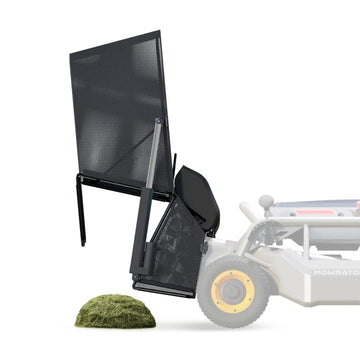
Large-yard mowing often fails for three reasons: short runtime, weak cutting performance, and poor traction on difficult ground. A battery-powered lawn mower can work well for a big property, but only when its battery system, deck size, cutting strength, and drive style match the yard. A flat half-acre lawn has different needs from a sloped acre with thick grass and uneven ground. Good mower selection begins with the hardest part of the property, then moves to runtime, charging, and cutting limits.

How Much Runtime Does a Large Yard Really Need?
For a large yard, runtime should be judged by how much grass the mower can actually cut per charge. A battery-powered lawn mower may run for 90 minutes on a flat, well-kept lawn, but thick grass, slopes, tight turns, and rough ground can reduce coverage. Check both the runtime and the estimated mowing area before choosing.
Large yards also need the right deck width. A wider deck cuts more grass per pass and can reduce total mowing time on open lawns. A narrower deck may feel easier around trees, gates, and tight corners, but it usually requires extra passes.
Mowing speed should stay realistic. Thick grass, uneven ground, and frequent turning slow the job. If a mower has a strong runtime rating but a narrow deck or a weak cutting system, it may still take too long for a large property. Runtime, deck width, and grass condition need to be judged together.
Why Battery Life Drops in Tall Grass, Wet Grass, and Sloped Areas
Battery life changes because the mowing load changes. A battery-powered lawn mower drains faster when the blade, wheels, and drive system have to work harder. Two yards with the same acreage can create very different runtime results.
The most common causes of faster battery drain include:
Tall grass: The blade cuts more material with every pass.
Dense grass: Thick growth increases resistance under the deck.
Wet grass: Moist clippings clump and slow the blade.
Low cutting height: Removing too much grass at once increases motor load.
Sloped areas: Climbing uses extra drive power.
Uneven terrain: Ruts, roots, and bumps reduce mowing efficiency.
Frequent turns: Tight areas slow progress and waste runtime.
Dull blades: Poor blade condition makes the motor work harder.
A lawn cut every week is easier on the battery than a lawn cut after several weeks of fast growth. For large yards, cutting frequency can be as important as battery capacity. Regular mowing helps the mower move faster, cut cleaner, and use less energy.
When reading electric lawn mower reviews, check for comments about thick grass, runtime loss, hill performance, and battery temperature. Ideal-condition runtime numbers are useful, but real owner feedback often reveals how the mower performs after 30 to 60 minutes of heavy work.
Charging Time, Spare Batteries, and Yard Size Planning
For half-acre to one-acre yards, check battery capacity, charge time, and spare battery options before buying a battery-powered lawn mower. A spare battery is usually more practical than waiting for one battery to recharge, especially during spring growth, before rain, or when the whole lawn needs to be finished in one session.
Cut slopes, thick patches, ditch edges, and rough ground while the battery is full. These areas place the highest load on the mower. Save flat open sections for later because they usually require less power.
Store batteries in a dry, moderate-temperature space near a convenient outlet. Extreme heat, deep discharge, and poor charging access can reduce battery life and make large-yard mowing less efficient.
Can a Battery-Powered Lawn Mower Handle Tall Grass and Slopes?
Yes, but the mower needs enough cutting power, traction, and height adjustment. Tall grass should be cut with a higher deck setting first. Cutting too low in one pass can clog the deck, drain the battery faster, and leave uneven patches. For a shorter finish, make a second pass after the first cut.
Sloped yards need stronger traction and steadier control. Uphill mowing uses more drive power, while loose soil, roots, and uneven ground can make cross-slope mowing harder to manage. Check slope rating, wheel grip, drive system, and cutting height before choosing a battery-powered lawn mower for banks, ditch edges, roadside strips, or rough backyard areas.
For demanding terrain, a remote-control design can reduce pushing effort and keep the operator away from difficult ground. The Mowrator S1 Leaf & Lawn 4WD is rated for a 119% grade, equal to 50 degrees, and uses a Grip Tread Tire design, 1985.6W peak cutting power, and model-rated tall-grass capability under suitable conditions.
Push, Riding, Robot, or Remote Control: Which Type Fits a Large Yard?
Large yards need different mower types depending on acreage, slope, grass height, storage space, and walking effort. Compare electric lawn mowers by the problem they are built to solve.
For flat open acreage, deck width and runtime usually matter most. For maintained grass, a robot mower may reduce weekly labor. For steep, rough, or physically demanding areas, traction, control distance, and cutting strength should carry more weight in the decision.
Choose a Battery-Powered Mower Based on Yard Size, Terrain, and Cutting Frequency
Before choosing a battery-powered lawn mower, separate the yard into open mowing areas, difficult terrain, and high-growth zones.
For open mowing areas, compare runtime, deck width, and charging speed. For slopes, ditch edges, uneven ground, and tight spaces, check traction, drive style, wheel grip, and control method. For thick or fast-growing grass, look at cutting height range, blade condition, and motor strength.
A lawn cut every week is easier for most electric lawn mowers to manage. A yard that often gets overgrown needs stronger cutting performance, a higher deck setting, and more battery planning.
Before buying, check the total mowable area, steepest slope, thickest grass section, charging location, and how much walking effort you want to avoid.
Make the Final Choice Based on the Hardest Part of the Yard
Choose a battery-powered lawn mower based on the section that creates the most work. For flat open lawns, compare runtime, deck width, and charging convenience. For slopes or rough ground, check traction, drive design, wheel grip, and control method. For fast seasonal growth, prioritize cutting power, cutting height range, and blade condition. Before buying, match the mower’s weakest point against your yard’s hardest condition.
FAQs about Battery Mowers for Large Yards
Q1. Is a Battery Mower a Good Choice for a Rural Property?
Yes, it can be a good choice if the mowable area, terrain, and charging setup match the mower. Rural properties often include rough edges, slopes, and taller growth, so traction and cutting strength matter more than quiet operation alone.
Q2. Should I Buy a Larger Battery or a Second Battery?
A second battery is often better for large yards because it reduces downtime. A larger battery can extend runtime, but one depleted battery still stops the job. Two batteries give more flexibility during heavy growth or tight mowing windows.
Q3. Can Battery Mowers Cut Uneven Grass Cleanly?
Yes, if the mower has enough cutting power, sharp blades, and a suitable deck-height range. Uneven grass often needs a higher first pass. Cutting too low, too quickly can leave missed patches and increase battery drain.
Q4. How Often Should I Sharpen the Blade on a Battery Mower?
Sharpen the blade whenever grass tips look torn, pale, or uneven after mowing. Many homeowners check the blade several times per season. Large yards, sandy soil, sticks, and thick grass can dull blades faster.
Q5. Are Battery Mowers Cheaper to Maintain Than Gas Mowers?
Yes, they usually cost less to maintain because they do not need oil changes, spark plugs, or fuel storage. They still need blade care, deck cleaning, wheel checks, battery storage, and occasional part inspection.