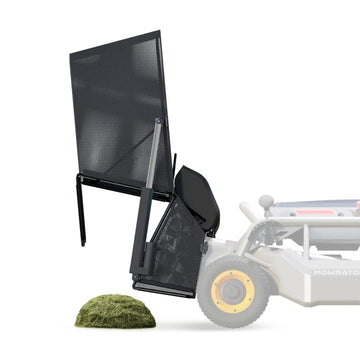
CFM usually matters more for collecting large amounts of leaves, while MPH matters more for loosening damp or packed material. For most yards, compare both ratings with the intake design and the type of leaves you usually collect.
Quick Comparison
| Spec | What It Measures | Best Use |
| CFM | Cubic feet of air moved per minute | Moving large volumes of loose leaves |
| MPH | Air speed in miles per hour | Loosening damp leaves and reaching tight areas |
CFM measures air volume, while MPH measures air speed.
When Does Higher CFM Improve Leaf Collection?
Higher CFM helps most when you need to collect a large volume of loose leaves. CFM stands for cubic feet per minute and measures how much air moves through the system.
Higher leaf vacuum CFM is especially useful for:
- Wide pickup areas: More air volume can support collection across a broad intake.
- Deep dry leaves: Large piles of lightweight leaves need steady airflow to keep material moving.
- Large collection systems: Higher air volume can carry shredded leaves through the deck and toward the collection bag.
If you are asking how much CFM does a leaf vacuum need, one target number cannot cover every design. A handheld vacuum and a mower based collector may use similar airflow very differently because their intake sizes and collection paths differ.

When Does MPH Matter More Than Air Volume?
MPH matters more when fast airflow needs to loosen damp leaves or pull material from tight spaces. Leaf vacuum MPH becomes especially useful when you compare machines with similar intake sizes and operating modes.
MPH deserves more attention around:
- Edges and corners: Faster airflow can move leaves away from walls, curbs, and narrow spaces.
- Damp leaf patches: Moist leaves can stick together and need more force to break loose.
- Narrow openings: A smaller intake can focus faster airflow across a tighter area.
A narrow intake may produce high air speed over a small area, while a wider intake can move more total air across the lawn. Compare MPH with CFM and intake size when judging leaf vacuum suction power.
Why Do Intake Width and Airflow Design Matter?
Intake width and airflow design matter because they control how available airflow reaches the leaves and carries them into the collection bag. Air moves through several parts of the machine before the leaves reach the bag.
The basic relationship between air velocity and volume flow helps show why opening size changes performance. A narrow opening can concentrate airflow, while a wider opening covers more ground.
Check four areas when comparing designs:
- Intake width: Wider openings cover more lawn per pass, while the available airflow spreads across a larger area.
- Airflow path: Smooth passages and gradual turns give leaves a more direct route through the machine.
- Shredding area: Blades or an impeller reduce leaf size before material enters the bag.
- Collection bag: Air still needs a clear exit after leaves enter, so a full or restricted bag can affect pickup.
Two machines with similar CFM ratings can collect leaves differently because intake shape and airflow path change how that air reaches the ground and moves debris.
How Do Wet Leaves and Heavy Debris Change Suction Needs?
Wet leaves and heavier debris put more load on the pickup system than dry leaves. Added weight, dense piles, and packed material increase the need for clear intake flow, suitable clearance, and steady travel speed.
| Leaf or Debris Condition | Main Pickup Need | Feature to Prioritize |
| Dry loose leaves | Move a high volume of light material | Higher CFM and a wider intake |
| Damp leaves | Combine strong airflow with enough air speed | Balanced CFM and MPH with focused intake flow |
| Wet packed leaves | Break up and lift heavier clumps | Strong airflow with a clear intake path and controlled travel speed |
| Pine needles | Pull thin debris close to the ground | Low intake position and focused airflow |
| Small twigs or acorns | Handle denser debris without clogging | Durable impeller and suitable intake clearance |
Dry leaves are generally easier to shred than damp piles. Wet material can clump, add weight to the collection bag, and require extra passes in dense areas.
For yards with frequent rain during leaf season, look beyond the highest CFM figure. Intake clearance, airflow concentration, shredding parts, and travel speed can become more useful comparison points.
Which Specification Should You Prioritize for Your Yard?
Prioritize CFM for high leaf volume and broad collection, while MPH deserves more weight for damp leaves and tight spaces.
| Yard Condition | First Spec to Check | Next Feature to Compare |
| Large open lawn | CFM | Intake width and bag capacity |
| Heavy dry leaf fall | CFM | Collection path and shredding system |
| Damp leaves | CFM and MPH | Intake shape |
| Tight beds and corners | MPH | Intake or nozzle control |
| Mixed yard conditions | CFM and MPH | Mobility and travel speed |
| Tree filled property | CFM | Runtime and collection capacity |
For mower based collection, deck width also matters because a wider deck covers more ground per pass. Bag capacity and travel speed then affect how long you can keep collecting before stopping.
Avoid choosing from one large headline number. Compare the rating that matches your main cleanup problem first, then check the hardware that puts the airflow to work.
Compare the Full Airflow System Before You Buy
Compare CFM and MPH alongside intake width, airflow design, collection capacity, and the material you usually clean up. Use the conditions in your own yard to narrow your choices, then pick a leaf vacuum whose full airflow system fits the job.
Common Questions About CFM, MPH, and Airflow Performance
Q1: Are CFM and MPH Ratings Standardized Across Manufacturers?
Only partly. Some outdoor power equipment categories have recognized performance testing procedures, while test coverage and equipment setups can vary across product types. Tube shape, attachment choice, operating mode, and measurement point can affect a published figure. Compare ratings from similar product types and look for clearly stated test conditions whenever those details are available.
Q2: Are Airflow Ratings Measured in Vacuum Mode or Blower Mode?
They can be measured in either mode. Combination blower vacuums may use different tubes, openings, impeller paths, and collection parts for each function. A CFM or MPH figure tied to blower operation describes that setup. For vacuum shopping, look for ratings specifically tied to vacuum operation when separate figures are available.
Q3: What Is the Difference Between Peak and Sustained Airflow Ratings?
Peak airflow is the highest output available during maximum power or a boost setting. Sustained airflow is the output a machine can maintain during regular operation for a longer period. Peak figures can show short term capability, while sustained figures give you a better reference for longer cleanup sessions where steady pickup matters.
Q4: Can High Altitude Affect Published Airflow Performance?
Yes. Air density decreases as altitude rises, so the amount of air mass moving through a fan can change at higher elevations. Lower air density can affect the force available to move heavier material. Published CFM and MPH figures are best compared under similar operating and test conditions.
Q5: Does a Higher Airflow Rating Usually Mean More Operating Noise?
Often, though airflow alone cannot predict noise. Motor speed, fan design, housing, intake shape, and operating mode also affect sound levels. Repeated exposure around 85 dBA or higher can increase hearing risk over time. Check a model specific dBA rating when noise matters for your yard or neighborhood.